

Neural Dynamics and Cognitive Functions
Bio
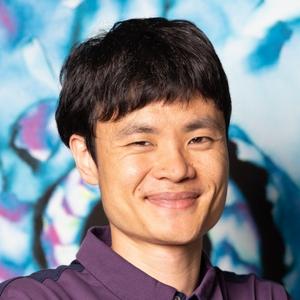
Dr. Inagaki started his Research Group Leader position at the Max Planck Florida Institute for Neuroscience (MPFI) in September 2019 leading the Neural Dynamics and Cognitive Functions research group. His current research focus is to understand cellular and network mechanisms underlying cognitive functions, such as purposeful movement initiation and time perception, in mice.
Prior to this appointment, Inagaki was a Helen Hay Whitney Foundation Postdoctoral Fellow at the Janelia Research Campus of Howard Hughes Medical Institute, working with Dr. Karel Svoboda. At Janelia, he studied the neuronal mechanism of short-term memory in frontal cortex.
Inagaki completed his Ph.D. under the mentorship of Dr. David J. Anderson at California Institute of Technology. For his graduate work, he studied the neuronal mechanism of internal states in Drosophila. For his B.S., he worked in Kei Ito’s lab at the University of Tokyo, where he studied the anatomical and physiological properties of mechanosensory neurons in Drosophila.
He is the recipient of numerous honors, including the Harold M. Weintraub Graduate Student Award, the Larry Katz Memorial Lecture Award, the Peter and Patricia Gruber International Research Award in Neuroscience, the Searle Scholar, and the Klingenstein-Simons Fellowship Award. In 2022, Inagaki was awarded the prestigious NIH Director’s New Innovator Award. This highly selective award recognizes early career researchers who demonstrate exceptional creativity and innovation in projects related to behavioral, social, or biomedical research.
Research
Research Topic
Neuronal dynamics, the patterns of action potentials in populations of neurons, mediate our perception of the world and drive our behavior. The ultimate goal of my lab is to understand how neuronal dynamics support diverse cognitive and motor functions. Currently, we focus on movement initiation and timing to study how neuronal dynamics are rapidly reconfigured throughout the entire brain to control behavior.
Many behaviors, including purposeful movements, are composed of multiple phases that require different computations. For example, while waiting at an intersection, we plan to press the gas pedal and do so at the moment the signal turns green. This example illustrates that purposeful movements have a planning phase and an execution phase. The planning phase is important because it makes the movement faster and more precise than unplanned movements. The planned movements will be initiated when appropriate, guided by external sensory cues or internal signals. What does happen when we switch from planning to execution? Previous studies have shown that the planning of movement, or motor planning, requires persistent neuronal dynamics in mutually connected brain areas, including the cortico-basal ganglia-thalamocortical loop (CBGTC loop). External or internal signals transform the persistent dynamics into totally different patterns of activity that execute movement, which is referred to as motor commands. We have recently identified a midbrain region that produces a brief signal, which is necessary and sufficient to trigger planned movements (Inagaki et al, in prep). Based on this novel finding, we are pursuing a unique strategy to map the flow of activity underlying the brain-wide transformation of dynamics from motor planning to motor commands.
In addition to switching across different dynamics, the speed of neuronal dynamics can be flexibly controlled. To act with appropriate timing, we often wait. When animals wait shorter or longer, the same group of neurons in the CBGTC loop show activity patterns that are shortened or stretched along the time axis. In other words, the “internal timer” (system that controls motor timing) in the brain speeds up or slows down dynamics. Yet, we don’t know where this internal timer is and how it controls the speed of dynamics. To identify such mechanisms, we study neuronal activities underlying motor-timing behaviors in mice.
To achieve the goals, we employ multidisciplinary approaches including creating novel molecular tools for circuit interrogation, developing novel behavioral tasks, building theoretical models to generate testable predictions, and recording neurophysiological responses in conjunction with optogenetic manipulations. Movement initiation and timing are mediated by neuronal circuits distributed across brain areas, while most brain research has focused on one brain area at a time. Our main strategy is to measure neuronal dynamics across brain areas with millisecond precision using high-density silicon probes, which will reveal the information flow across brain areas. Optogenetic manipulation in conjunction with electrophysiological recordings enable us to probe energy landscapes underlying dynamics which will distinguish theoretical models (Inagaki et al, 2019).
Adaptive behaviors are supported by flexible reconfiguration of neuronal dynamics. This research program will address this fundamental brain function. In addition, our discoveries may serve as the basis for principled therapeutic strategies for motor diseases.
We are actively recruiting Graduate Students, Postdocs, and Research Technicians. We are particularly interested in candidates with quantitative backgrounds. If interested, please send your CV, reference information, and a brief cover letter describing your background and interests to hidehiko.inagaki@mpfi.org.

News & Media
News


Videos


Lab
Lab Members








Alumni Members












Recent Papers
Preprints
Publications
Complementary roles of cell-type-specific plasticity in shaping neocortical dynamics for learning action timing
Majumder, S., Hirokawa, K., Yang, Z., Jain, A., Paletzki, R., Gerfen, C. R., Fontolan, L., Romani, S., Yasuda, R., & Inagaki, H. K. (2026). Complementary roles of cell-type-specific plasticity in shaping neocortical dynamics for learning action timing. Nature Communications.
Integrator dynamics in the cortico-basal ganglia loop for flexible motor timing.
Yang, Z., Inagaki, M., Gerfen, C. R., Fontolan, L., & Inagaki, H. K. (2025). Integrator dynamics in the cortico-basal ganglia loop for flexible motor timing. Nature, 1–10.
Sub-threshold neuronal activity and the dynamical regime of cerebral cortex
Amsalem, O., Inagaki, H., Yu, J., Svoboda, K., & Darshan, R. (2024). Sub-threshold neuronal activity and the dynamical regime of cerebral cortex. Nature Communications, 15(1), 7958.
Neural Algorithms and Circuits for Motor Planning.
Inagaki H.K., Chen S., Daie K., Finklestein A., Fontolan L., Romani S., Svoboda K., (2022), Neural Algorithms and Circuits for Motor Planning. Annual Review of Neuroscience. 45:1
A midbrain-thalamus-cortex circuit reorganizes cortical dynamics to initiate movement.
*Inagaki, H. K., *Chen, S., Ridder, M. C., Sah, P., Li, N., Yang, Z., Hasanbegovic, H., Gao, Z., Gerfen, C. R., & Svoboda, K. (2022). A midbrain-thalamus-cortex circuit reorganizes cortical dynamics to initiate movement. Cell, 185(6), 1065-1071.e23. https://doi.org/10.1016/j.cell.2022.02.006
*equal contribution
Discrete attractor dynamics underlying selective persistent activity in frontal cortex.
Inagaki HK, Fontolan L, Romani S, Svoboda K. (2019) Discrete attractor dynamics underlying selective persistent activity in frontal cortex. Nature 566: 212-217.


All Labs
Continue Reading..
Continue Reading..
Continue Reading..
Continue Reading..
Continue Reading..
Continue Reading..
Continue Reading..
Continue Reading..
Continue Reading..